The Market
The Los Angeles Real Estate Market: A Six-Month Snapshot
Christina Kim · 10 Sept 2025 · 2 min read

Modest Price Declines and Slower Appreciation
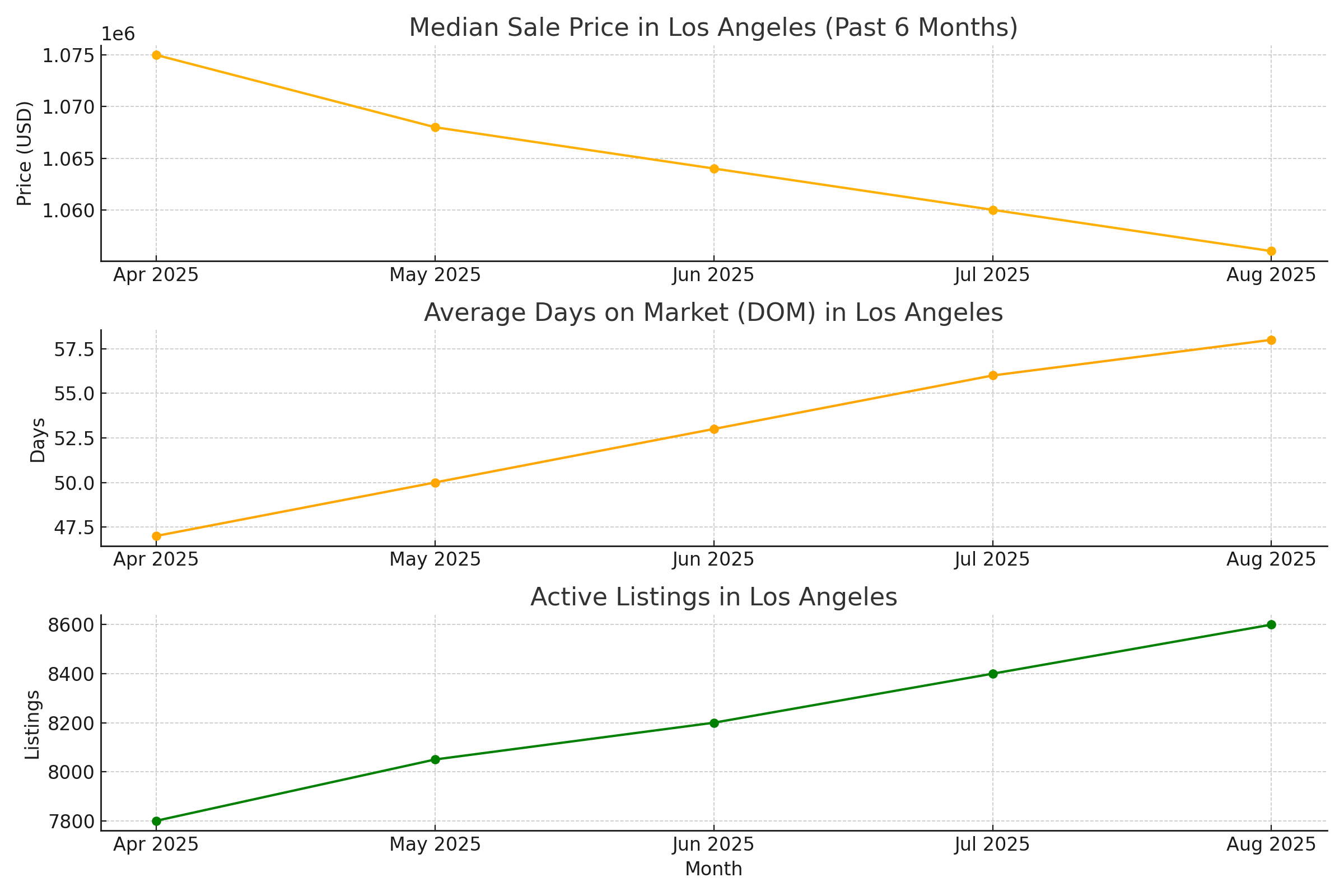
- As of July 2025, the median sale price in Los Angeles hovered around $1.06 million, marking a slight 0.47% dip year-over-year. Homes are selling in roughly 58 days, up from 44 days this time last year.
- Zillow’s data puts the average home value at about $951,368, down around 1.2% over the past year.
- Realtor.com reports that by August 2025, the median listing price sat near $1.2 million, showing a more pronounced –4.1% year-over-year trend.
Bottom line: While L.A. prices remain high, growth is slowing—and in some cases, reversing.
Inventory & Listings: Still Tightly Held
- Early 2025 saw a 9.3% year-over-year increase in active listings across Southern California, but in core areas like L.A., inventory remains tight at about 2.5 to 3 months of supply, keeping competition steady.
- New listings increased 7.3% compared to last July, though the typical spring surge didn’t fully materialize this year—suggesting a mix of hesitance from both buyers and sellers.
- In January 2025, new listings fell by about 12%, driven by homeowners reluctant to give up low mortgage rates for today’s ~6% rates—a phenomenon known as the "lock-in effect."
Wildfires and the Rental Market Aftershock
- The January 2025 Southern California wildfires were catastrophic—impacting tens of thousands of homes and escalating housing pressures dramatically.
- Displaced residents sparked bidding wars in the rental market, causing significant rent increases even in regulated contexts.
- Despite legal protections, some landlords raised rents by up to 124%, well above the 10% cap allowed during emergencies—a practice under scrutiny and enforcement.
- In high-demand areas like Malibu, even vacant lots are now commanding multi-million prices, underscoring enduring demand—even in fire-affected zones.
Policy Momentum Aims to Alleviate Supply Challenges
- SB 79 (Abundant and Affordable Homes Near Transit Act) was introduced in January 2025. It aims to encourage denser housing development near transit stations (4–9 stories), streamline permitting, and enhance wildfire protections.
What This Means for Buyers and Sellers
- Buyers face elevated costs and tighter competition, but slowing price growth and more inventory (in some segments) could offer strategic opportunities—especially as rates remain high.
- Sellers are seeing longer list times and may need sharper marketing strategies or flexible pricing to achieve success.
- Renters—especially fire-displaced individuals—are navigating intense competition, high rents, and regulatory protections still being enforced.
- Policy-wise, steps like SB 79 could ease future housing pressures, but tangible impact will take time.
Final Thought
Over the last six months, L.A.’s real estate landscape has been shaped by slowing home price growth, tight but slowly loosening inventory, wildfire-driven rental upheaval, and legislative moves aimed at long-term housing solutions. In this evolving market, agility, awareness, and strategic guidance are your most valuable assets.
Written by


Let's talk
Thinking about a move in LA?
Whether you're buying, selling, or just curious what your home is worth — start with a conversation. No pressure, no obligation.
Book a consultation