Rates, Gas, and a War Overseas: What It All Means for Your LA Home Right Now
Christina Kim · 30 Oct 2026 · 7 min read
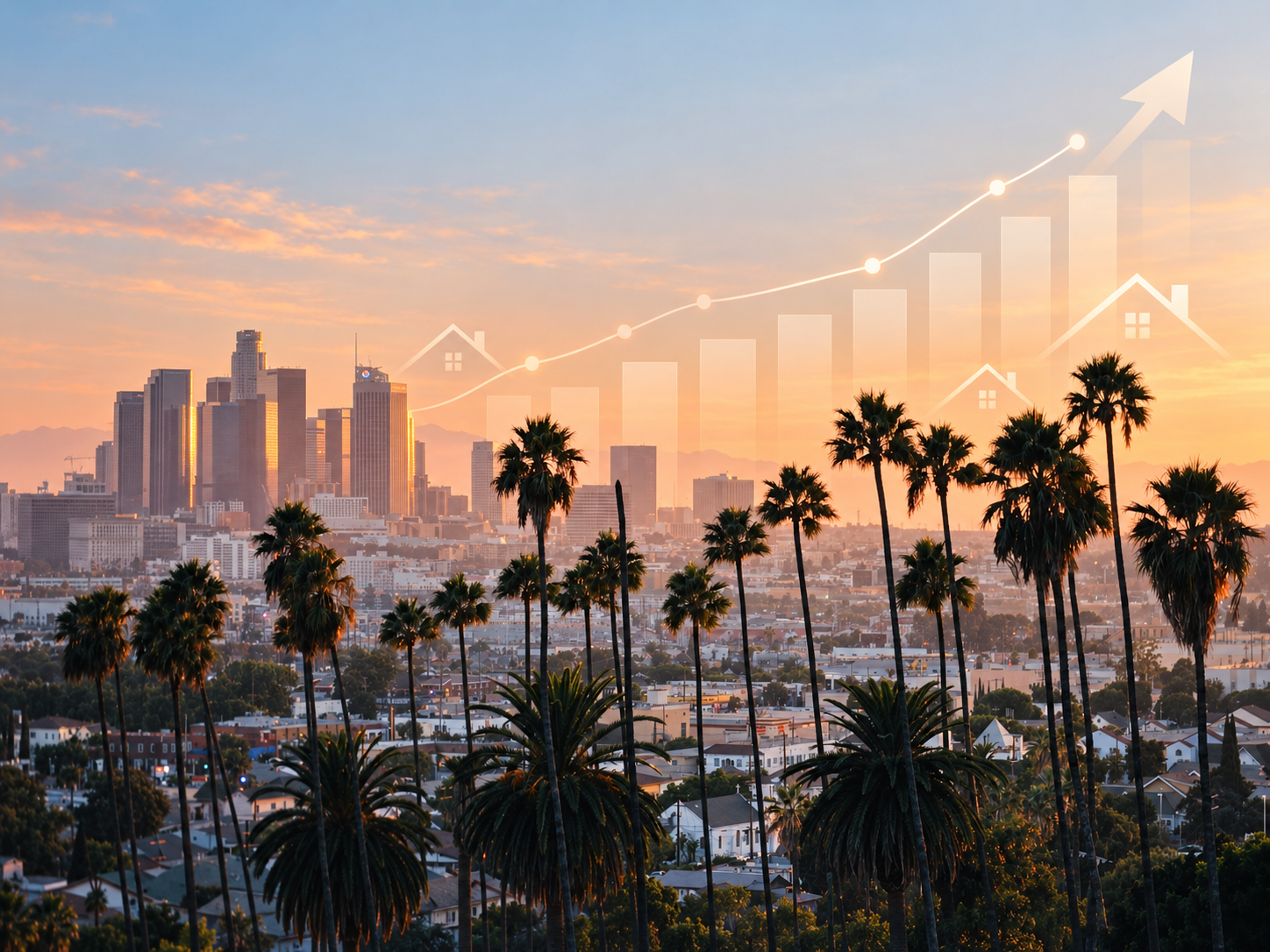
If you've been watching the headlines this fall and feeling a knot in your stomach about buying or selling a home, you are not alone. Inflation is creeping back up, a conflict in the Middle East is dominating the news, gas just cost you a small fortune to fill the tank, and your insurance bill arrived looking a lot heavier than last year. It's a lot. And when you're trying to make one of the biggest financial decisions of your life, all that noise can make it feel impossible to know whether now is the right time to make a move.
So let me do what I do best: cut through the noise and tell you, in plain English, what's actually happening in the Los Angeles market and what it means for your situation. The short version? This is a more complicated market than it was a year ago, but it is absolutely a navigable one, and for a lot of buyers it's quietly become more favorable than the headlines would suggest.
The big picture: inflation came back, and the Fed got tougher
Here's the backdrop. After a couple of calmer years, inflation re-accelerated this fall. The September Consumer Price Index, released October 14, came in at 3.7% year-over-year — hotter than economists expected and up noticeably from the summer. The biggest culprit was energy, which I'll get to in a moment.
That reading put the Federal Reserve in a tough spot. Under Chair Kevin Warsh, the Fed has taken a distinctly hawkish turn — meaning its priority right now is wrestling inflation down, even if that keeps borrowing costs high. At its October 29 meeting, the Fed held its key interest rate steady at 3.75%–4.00%, but it was a split decision: the vote was 10-2, and notably, the two dissenters wanted to raise rates, not cut them. Markets are now betting a December rate hike is more likely than not.
Why does this matter to you? Because a lot of people hear "the Fed held rates steady" and assume mortgage rates are about to get cheaper. I want to be really clear about this: a Fed hold does not mean cheaper mortgages. The Fed's rate and your mortgage rate are cousins, not twins. Mortgage rates track longer-term bond yields, which move on inflation expectations — and with inflation heating back up, those expectations have kept home loans expensive.
Mortgage rates are near their 2026 high
Let's talk numbers, because this is the one that hits your monthly payment hardest. As of Freddie Mac's survey on October 29, the average 30-year fixed mortgage sat at about 7.24%, with the 15-year fixed around 6.60%. Both eased slightly in the final weeks of October, but make no mistake — these rates are near their highest point of the year and roughly a full percentage point above where they were a year ago.
On a real loan, that one point is real money. It's the difference between a comfortable payment and a stretch, and it's the single biggest reason the market has cooled from its frenzied years. The honest outlook from forecasters is that rates are likely to stay in the high-6% to mid-7% range into 2027, with the risk tilted toward that December Fed hike. I'd rather tell you that straight than sell you a fantasy about rates tumbling next spring.
The war, oil, and why it all connects back to your mortgage
Here's the thread that ties everything together, and it surprises people. The ongoing Israel–Iran conflict has disrupted shipping through the Strait of Hormuz — one of the world's most important oil passages. I'll keep the geopolitics brief and stay out of taking sides; what matters for your home decision is the economic ripple effect.
That disruption pushed crude oil back above $100 a barrel this fall, roughly double where it sat earlier in the cycle. Expensive oil means expensive gasoline, and expensive energy is exactly what drove that 3.7% inflation reading. Higher inflation keeps the Fed hawkish and keeps bond yields — and therefore mortgage rates — elevated. So that conflict you're reading about overseas is, believe it or not, part of why your mortgage quote came back higher than you hoped. It's all one connected story: war abroad, pricier oil, hotter inflation, and a tougher rate environment here at home.
Gas prices are squeezing LA especially hard
You've felt this one at the pump. The national average is hovering around $4.20 a gallon, but here in California we're paying far more — roughly $5.89 statewide, with much of LA County sitting in the $5-plus range. That's well over a dollar more per gallon than the rest of the country.
Part of that gap is the global oil spike, but part of it is homegrown. California has lost significant refining capacity — the Phillips 66 refinery in Wilmington has shut down, and Valero's Benicia refinery has been idled and, as of late October, will not be restarting. Less in-state supply means higher prices at the pump.
For a car-dependent city like ours, that's not a rounding error. A two-car LA household can easily spend well over a thousand dollars more a year on fuel than a family in a cheaper-gas state. And every dollar going into the gas tank is a dollar not going toward a down payment or a mortgage payment. It tightens budgets and, at the margins, trims how much home a family can comfortably afford.
The real squeeze: your paycheck isn't keeping up
This is the part that explains why so many people simply feel worse off, even when the economy looks okay on paper. Inflation is currently outrunning wages — real (inflation-adjusted) earnings were slightly negative this fall. Consumer sentiment has sunk to roughly 48 on the University of Michigan index, near multi-year lows.
And for homeowners specifically, there's a carrying cost that doesn't get enough attention: insurance. The California FAIR Plan raised its rates by about 29% effective October 15, and premiums are climbing across the board as insurers price in wildfire risk. For many LA homeowners, insurance has quietly become one of the fastest-growing line items in the monthly budget — something every buyer should factor in before they fall in love with a house.
So how is the LA market actually doing?
With all that pressure, you might expect prices to be crashing. They're not — and this is where it gets nuanced. According to the latest data from the California Association of Realtors (September, released in mid-to-late October), the statewide median price was about $899,700, up 1.7% from a year ago. Prices are holding. What's not holding is sales volume: Southern California sales fell about 9.1% year-over-year — the steepest drop of any region in the state. LA County's median listing price has eased to around $950,000, off its spring peak. Inventory is loosening modestly (about 3.7 months of supply statewide), and homes are taking longer to sell.
The key word for our market is bifurcated — it's really two markets right now. At the top, cash-heavy luxury buyers in neighborhoods above the $1–2 million mark are largely shrugging off interest rates; well-priced, move-in-ready homes in prime areas still draw multiple offers. But the rate-sensitive entry and mid-level market — where most families actually shop — is noticeably softer, because those buyers feel every tick in the mortgage rate.
And affordability remains brutally tight. By recent estimates, only about 17% of LA County households can afford the county's median-priced home. That gap between prices and paychecks is the defining challenge of our market.
A couple of local wrinkles worth knowing: the Measure ULA "mansion tax" still applies to high-end LA City sales (there's a Palisades fire-victim exemption on the November 3 ballot worth watching), and wildfire rebuilding in the Palisades and Eaton areas remains slow, reshaping inventory and insurance on the Westside and in the foothills.
What this means for you — buyers and sellers
If you're buying: the cooling is working in your favor more than you might think. There's less competition, more homes to choose from, more negotiating room, and sellers are increasingly open to price cuts and concessions. Yes, rates are high — but remember the old wisdom: marry the house, date the rate. You can refinance a loan down the road if rates ease; you can't go back and buy today's house at today's negotiated price. If you find the right home and the payment works for your budget now, high rates shouldn't automatically scare you off.
If you're selling: your home can absolutely still sell — but the days of naming any price and watching offers pour in are behind us, at least for now. Price it realistically from day one, because overpriced homes are the ones sitting on the market for months. Presentation matters more than it has in years. Well-prepared, well-priced homes are still moving, and often faster than their neighbors who guessed high and had to chase the market down.
The honest truth is that this is neither a boom nor a bust. It's a market that rewards good decisions and punishes wishful thinking — on both sides. And that's exactly where having someone in your corner who watches this stuff every single day makes the difference.
Let's talk about your specific situation
Every one of these headlines lands differently depending on your neighborhood, your timeline, your budget, and your goals. That's the whole point — numbers in a blog post can't tell you what's right for your move. That's what I'm here for. If you're even starting to think about buying or selling in Los Angeles, reach out to me. Let's sit down, look at your real options, and build a plan that makes sense for you and your family — no pressure, just clear, honest guidance from someone who knows this market inside and out.
This post reflects market conditions as of late October 2026 and is for general informational purposes only — it is not financial, investment, legal, or tax advice.
Sources
- Freddie Mac Primary Mortgage Market Survey
- FOMC October 2026 decision coverage — Admiral Markets
- September 2026 CPI report (3.7% y/y) — TD Economics
- Treasury yields and the October Fed outlook — MPA Magazine
- AAA Gas Prices, October 2026
- California gas prices 2026 — US Gas Gauge
- Phillips 66 to wind down LA refinery — Argus Media
- Valero Benicia refinery closure — Argus Media
- California home sales fall amid mortgage-rate spike (C.A.R. September 2026) — MPA Magazine
- LA County median listing price — FRED
- LA / Orange County home affordability (Q2 2026 C.A.R.) — Spectrum News
- California FAIR Plan rates rising 29.1% — Insurance News Net / OC Register
- UMich consumer sentiment, October 2026 — Trading Economics
- Measure ULA Palisades fire exemption on November 2026 ballot — NBC Los Angeles



Thinking about a move in LA?
Whether you're buying, selling, or just curious what your home is worth — start with a conversation. No pressure, no obligation.
Book a consultation